
Introduction
In 2026, the average shopping cart abandonment rate of cross-border independent stations stays above 70% across the whole industry. Massive visitors add products to carts but quit the payment page halfway, resulting in huge waste of advertising traffic and front-end promotion costs. Most store owners only focus on increasing ad spend to pull more visitors, yet ignore optimizing the checkout link which directly determines final deal closure. According to Globe Fulfillment’s store operation big data, stores that finish systematic cart abandonment optimization can lift overall order volume by 25% to 40% without extra ad budget. This store analysis article breaks down the root causes of cart dropout, delivers a standardized data diagnosis workflow, and provides replicable page & policy optimization schemes to help sellers dig out hidden orders from existing traffic.
Main Root Causes of High Cart Abandonment Rate for Independent Stores
The first common factor is unexpected extra fees displayed at checkout. Many stores do not mark shipping fees, tax charges and handling costs on product pages. Customers only see additional expenses after filling in shipping information, and most users will directly exit the page out of price aversion.
Second, overly complicated checkout steps force users to give up. Mandatory account registration, excessive form items, repeated address filling and slow page loading greatly increase operation costs for buyers. Mobile terminal users are especially sensitive to tedious procedures.
Third, insufficient payment method compatibility. If the website only supports PayPal and credit cards while excluding mainstream local payment tools in target countries, a large group of potential orders will be lost due to unavailable payment channels.
Fourth, lack of trust signals on the settlement page. No logistics guarantee, unclear return policy, no security payment icon and missing customer review modules make overseas shoppers doubt store credibility and hesitate to complete payment.
A senior store operation consultant commented: “Traffic acquisition is the input, and checkout completion is the output. Cutting cart abandonment is the lowest-cost way to improve store profitability, far more efficient than simply expanding advertising scale.”
Four Core Links to Diagnose Cart Abandonment Data
Diagnosis 1: Analyze dropout distribution on each checkout page Check background data to confirm whether users quit at the cart page, address filling page or payment selection page, and lock the weakest conversion node with targeted modification.
Diagnosis 2: Count abandonment proportion by traffic source Distinguish dropout rates of Facebook ads, TikTok short videos, Google search and influencer drainage, so as to filter low-quality invalid traffic sources and adjust delivery direction.
Diagnosis 3: Classify abandoned orders by product category & unit price Summarize which SKUs and price ranges have the highest cart discard ratio, adjust pricing strategy, bundle sales or product description for high-loss items.
Diagnosis 4: Track user behavior after leaving the page Observe whether returning visitors will re-enter the website within 24 hours, and judge whether automatic reminder emails and message retargeting are needed to recall lost orders.
Standard Step-by-Step Optimization Process for Cart Abandonment Recovery
Step 1: Display all additional fees transparently on product and listing pages Mark estimated shipping cost, destination tax and service fee below the price tag in advance, avoid sudden extra charges in the settlement stage to reduce user psychological gap.
Step 2: Simplify checkout process to support guest checkout Cancel compulsory registration, enable one-page checkout, minimize input fields of name, address and contact information, and adapt page loading speed for mobile devices.
Step 3: Access mainstream local payment channels of target markets Integrate local popular payment wallets, installment payment and cash-on-delivery options according to sales countries, remove payment barrier at the final transaction step.
Step 4: Add trust badges and standardized after-sales statements on checkout page Insert SSL security mark, logistics delivery promise, clear return & exchange rules and real buyer reviews to strengthen consumer shopping confidence.
Step 5: Launch automated abandoned cart recall mechanism Set timed email, SMS and social platform push reminders for users with unpaid carts, attach exclusive small discounts or free shipping coupons to stimulate order completion.
Cart Loss Control & Store Conversion Optimization Checklist
- Enable guest checkout mode to avoid losing customers who refuse to register a new account.
- Clearly label shipping cost calculation rules on the product detail page and homepage to eliminate hidden fees.
- Compress website image and code resources to ensure fast opening of checkout pages on mobile phones.
- Complete payment channel expansion to cover mainstream payment methods in core sales regions.
- Turn on the background abandoned cart automatic reminder function with differentiated coupon strategies.
- Regularly sort out high-abandonment SKUs, optimize product pricing, package combination and detail page description.
- Set free shipping threshold reasonably to guide users to add more goods to the cart and increase order value while lowering dropout rate.
Real Independent Store Optimization Success Case
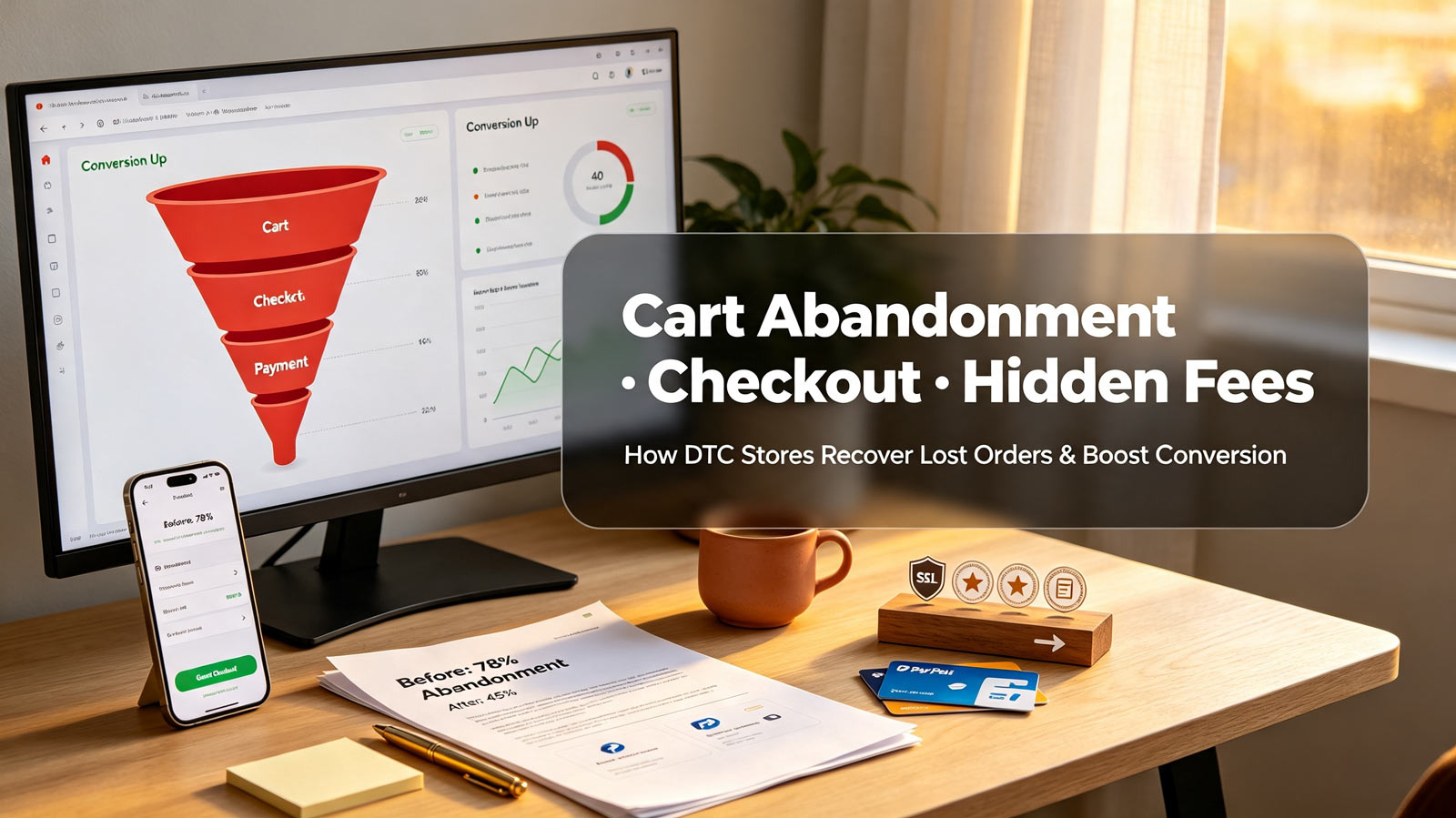
A fashion accessories independent store kept pouring money into TikTok and Facebook ads, with stable daily visitor volume but extremely low order volume. The background data showed the cart abandonment rate remained at 78% for a long time. The operation team used to think the problem lay in advertising material, so they kept replacing creative content with little improvement.
After adopting the full set of cart abandonment diagnosis and optimization methods, the store optimized transparent fee display, opened guest checkout, added local payment methods and configured automatic email recall coupons.
Within three weeks, the store’s shopping cart abandonment rate dropped from 78% to 45%, the order conversion rate increased by 36%, and the advertising ROI was significantly improved without raising the daily ad budget.
The store operator shared: “We used to blindly increase traffic investment, but ignored the serious leakage at the checkout link. Fixing cart loss makes every penny of advertising spend truly generate orders.”
Key Takeaways Core Summary
- High shopping cart abandonment rate is a common systematic operational leakage for most independent sites, which directly wastes traffic and advertising costs.
- The top causes of cart dropout are hidden extra charges, cumbersome checkout steps, single payment channels and lack of page trust elements.
- Data diagnosis to locate specific dropout nodes plus page function & policy optimization can effectively reduce unpaid cart loss.
- Automated message recall and coupon incentives are efficient means to recover a large number of pending orders with low extra cost.