
Introduction
Precise IATA airport codes and UN/LOCODE port codes are critical for cross‑border freight routing, customs declaration and carrier booking. Most DTC teams rely on fragmented third‑party platforms to query these logistics identifiers, easily causing data errors, outdated information and shipment delays.
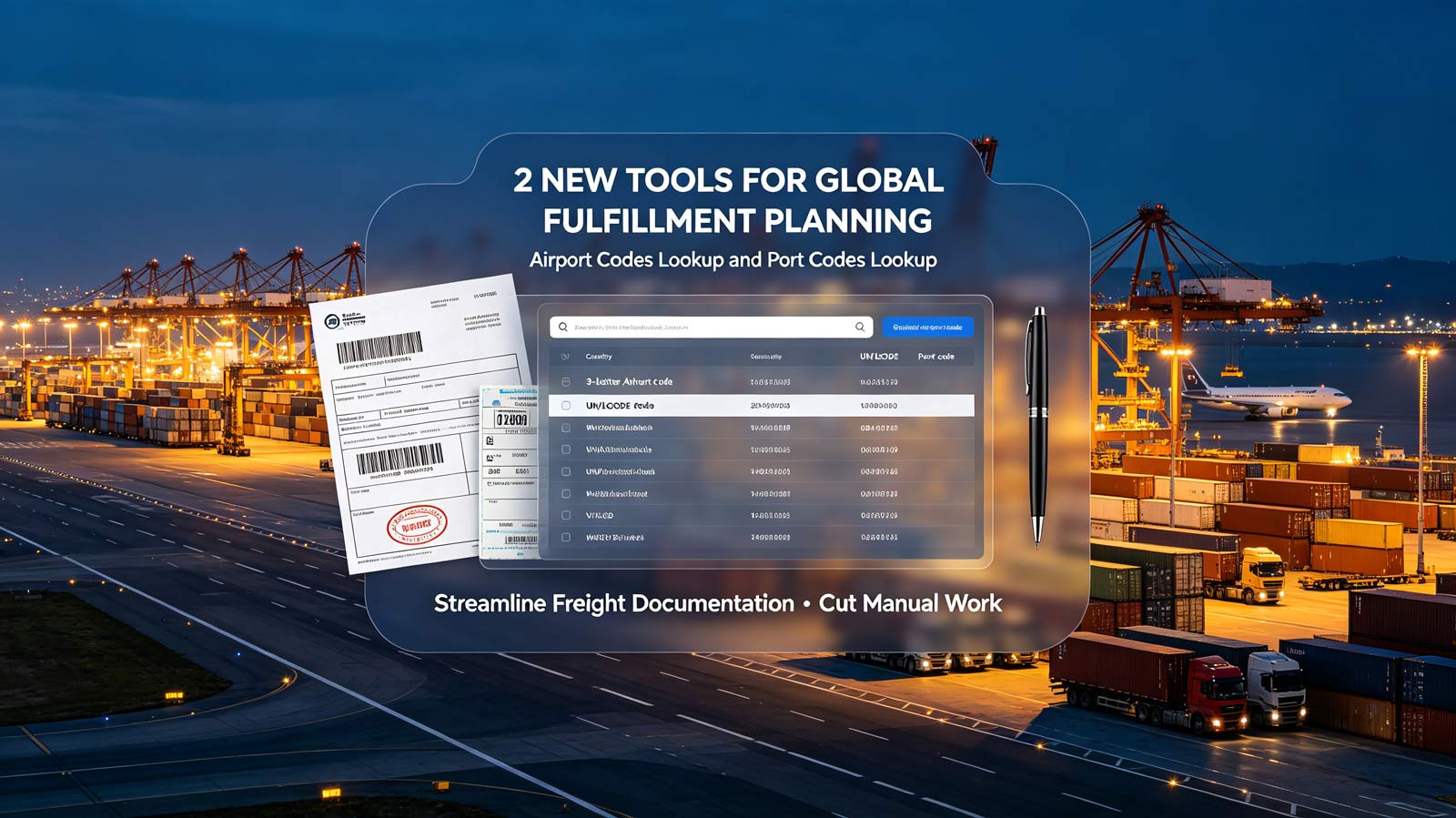
To solve this pain point, two built‑in logistics lookup tools have been officially released. Backed by our global network covering 50+ countries and 30+ fulfillment centers, the Airport Codes Lookup and Port Codes Lookup provide standardized, filterable official data for all active merchants, eliminating the need for third‑party tools.
Background for This Tool Release
Based on feedback from 10 000+ global sellers, frequent manual code queries during inbound shipment planning, customs filing and freight comparison create massive operational friction. Public datasets are often outdated, and cross‑platform querying slows down overall logistics workflows.
Minor code errors can trigger cargo misrouting, customs detention and warehouse receiving delays, severely disrupting inventory pre‑stocking arrangements, especially during peak Q4 sales seasons. The new native tools effectively avoid these operational risks for merchants.
Core Capabilities of the Two New Tools
Airport Codes Lookup
Functionality: Search across 9 000+ global IATA airport records. Merchants can filter results by country, city name or 3‑letter code.
- Quickly retrieve IATA identifiers for air‑freight inbound planning
- Verify destination codes when comparing air‑carrier rate sheets
- Copy formatted code‑and‑location pairs for customs document drafting
Port Codes Lookup
Functionality: Query UN/LOCODE seaport records covering 17 000+ global ports for sea‑freight logistics workflows.
- Look up official UN/LOCODE values for ocean‑freight bookings to fulfillment‑network hubs
- Cross‑validate port identifiers before submitting inbound cargo manifests
- Filter port lists by target region when planning multi‑warehouse inventory distribution
Real‑World Operational Impact for Merchants
Internal beta test metrics collected from cooperating DTC stores:
- Time spent researching freight‑location identifiers reduced by 32% per inbound shipment task
- Data‑entry‑related inbound receiving errors dropped by 28% among beta‑phase testers
- Reduced tab‑switching between external resources streamlines pre‑Q4 inventory pre‑loading preparation
Data Source Note: All metrics are based on anonymized beta test data from cooperating DTC stores during Q3 2026. Actual results will vary depending on product catalog, shipment frequency and workflow structure.
How This Connects With Existing Platform Workflows
These reference tools complement existing AI‑powered supply‑chain modules. When merchants run demand‑forecasting outputs and plan inbound inventory shipments for their selected SKU portfolio, they can open the lookup utilities directly to finalize freight documentation.
This creates a smoother end‑to‑end workflow: product‑selection decisions generate stocking plans → the code‑lookup tools support accurate inbound paperwork → the fulfillment network receives goods correctly → AI inventory allocation distributes stock across regional centers.
It removes one manual friction point from the merchant's global supply‑chain routine.
Access Information
Core Takeaways
- New built‑in Airport‑Code and Port‑Code Lookup tools eliminate reliance on scattered third‑party resources for freight documentation work.
- Standardized reference data lowers the risk of cargo mis‑routing and customs delays caused by incorrect transport identifiers.
- Faster inbound‑document preparation supports tighter timelines for pre‑peak‑season inventory pre‑loading.
- The new utilities integrate with existing AI supply‑chain workflows to streamline merchants' end‑to‑end fulfillment planning.