
Introduction
What Changed on September 27, 2026
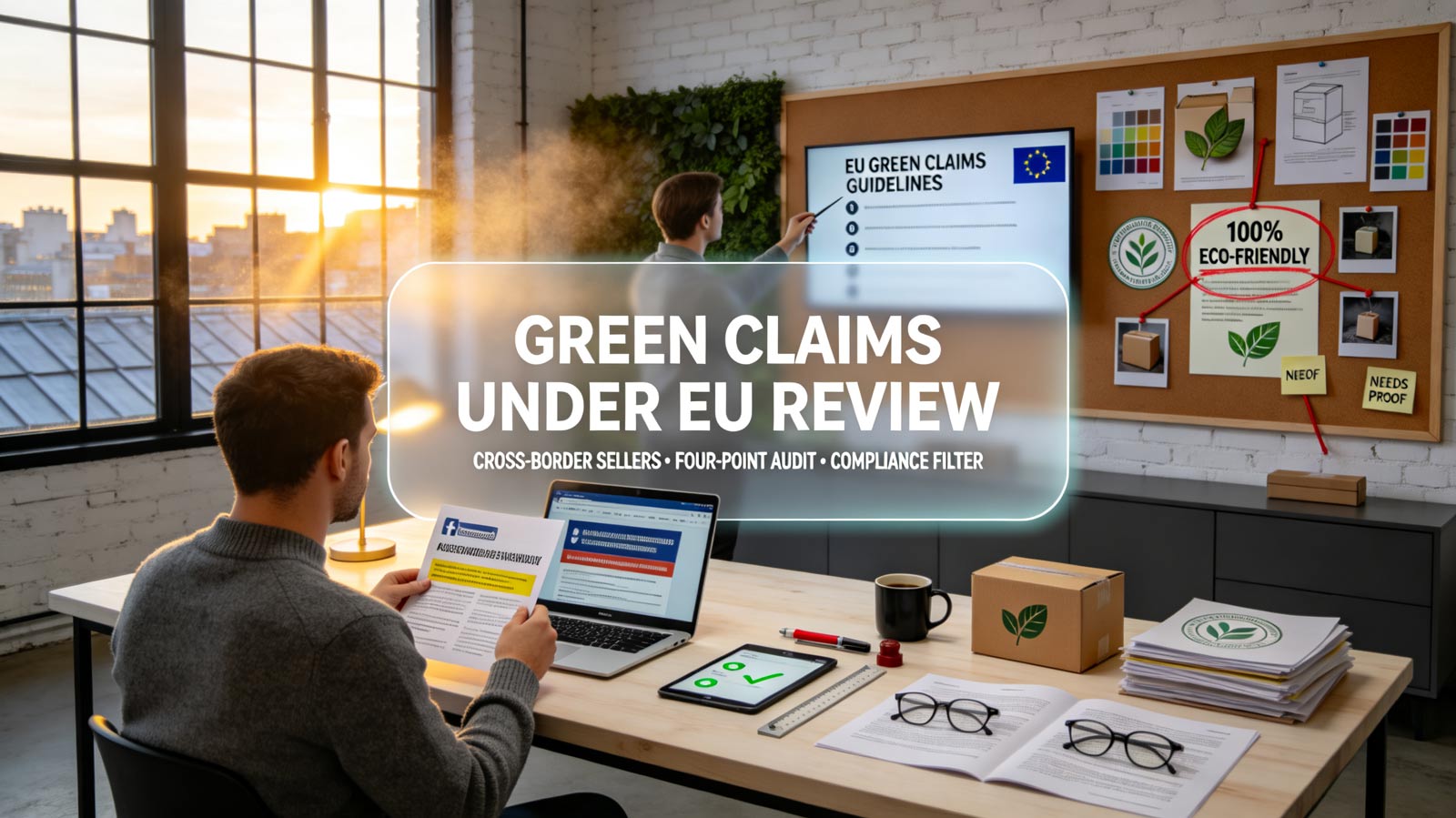
Short answer: the EU Empowering Consumers Directive now treats unsubstantiated environmental marketing claims as misleading by default. The directive targets the gap between marketing language and verifiable product attributes. Its four core prohibitions:
- Unsubstantiated generic claims — "green," "eco," "sustainable," or "planet-friendly" without recognized certification or life-cycle evidence are now treated as misleading by default.
- Carbon-neutral claims based on offsets — offsetting emissions can no longer be presented as neutralizing a product's footprint; the claim must reflect actual reductions.
- Selective disclosure — highlighting one green attribute (recyclable packaging) while material impacts go unmentioned is classified as misleading omission.
- Self-created labels — brand-owned "eco badges" without third-party verification are treated identically to unverified text claims.
Critically, the green claims rules apply to any cross-border seller marketing to EU consumers, regardless of where the store is registered. Enforcement flows through two channels: national consumer authorities scanning listings and ad copy, and platform-level filtering that silently suppresses flagged products before any legal process begins.
Who Gets Filtered First: The Enforcement Pattern
Short answer: ad-spend-heavy stores, multi-marketplace sellers, and certification-less "green" categories face filtering first. Early enforcement data from Q3 2026 shows green claims review concentrates on three seller profiles:
- Ad-copy-heavy stores — paid social campaigns are scanned at scale; listings spending on EU traffic face review rates roughly 4× higher than organic-only listings.
- Multi-marketplace sellers — inconsistent claims across platforms trigger faster platform action, since contradictions between listings are treated as evidence of intent.
- Certification-less "green" categories — home goods, personal care and apparel see the highest flag rates, because these categories carry the densest unverified green claims language.
The financial exposure extends beyond fines. Filtered listings typically lose 60–80% of EU impressions within two weeks, and ad accounts carrying repeated flags face elevated CPMs or suspension — a cost structure that mirrors the silent leakage patterns mapped in our Store Analysis column.
The Four-Point Green Claims Audit
Short answer: inventory every environmental claim, replace generic wording with certified specifics, align copy across all channels, and maintain a per-SKU evidence file. Run this green claims audit across every EU-facing listing before scaling Q4 ad spend — approximately two hours for a 20-SKU store.
- Point 1 — Inventory every claim. Export all listing copy, ad creatives and email flows; any environmental wording that can't be matched to a certificate or test report gets marked for removal or rewrite.
- Point 2 — Replace generic with specific. "Eco-friendly bottle" fails; "85% post-consumer recycled PET, certified to [recognized standard]" passes — the directive penalizes vagueness, not sustainability.
- Point 3 — Align across every channel. Match wording word-for-word between your independent store, marketplace listings and ad copy; divergent claims are the fastest trigger for platform-level filtering.
- Point 4 — Build the evidence file first. Keep a per-SKU folder of certificates, test reports and supplier declarations; stores that respond to authority requests within days clear flags, those that scramble convert a review into a penalty.
What This Means for H2 2026 and Beyond
Short answer: green claims compliance is shifting from a cost center to a measurable EU traffic advantage. Two structural shifts follow from the crackdown:
- Compliance becomes a traffic asset. Verified-claim listings face less filtering, cleaner ad delivery and higher EU conversion as skeptical consumers migrate toward substantiated products. Early data suggests certified-claim listings retain 15–20% higher EU click-through on identical creative, because trust badges now carry regulatory weight.
- Green positioning consolidates to resourced brands. Smaller sellers running generic claims exit EU ad auctions first, concentrating compliant demand among cross-border stores with evidence files. This is the same consolidation pattern observed in our earlier EU responsible-person analysis — regulation functioning as a market filter rather than a blanket cost.
The sellers who treat this as a copywriting fix will stay exposed; the sellers who treat green claims compliance as an evidence infrastructure project will convert a regulatory burden into a durable EU positioning advantage.
Core Takeaways
- Since September 27, 2026, vague green claims without recognized certification are treated as misleading by default for any marketing to EU consumers — regardless of where the cross-border seller is registered.
- Enforcement filters sellers through two channels: national authority scans and platform-level suppression, with ad-heavy stores flagged at roughly 4× the rate of organic-only listings.
- The compliance mechanism is specificity, not silence: replace generic green claims with quantified, certified attributes, and align wording across every channel to avoid contradiction-based filtering.
- Build per-SKU evidence files now — certificates, test reports, supplier declarations — and complete the four-point green claims audit before scaling Q4 EU ad spend; verified claims are becoming a measurable traffic advantage.