
Introduction
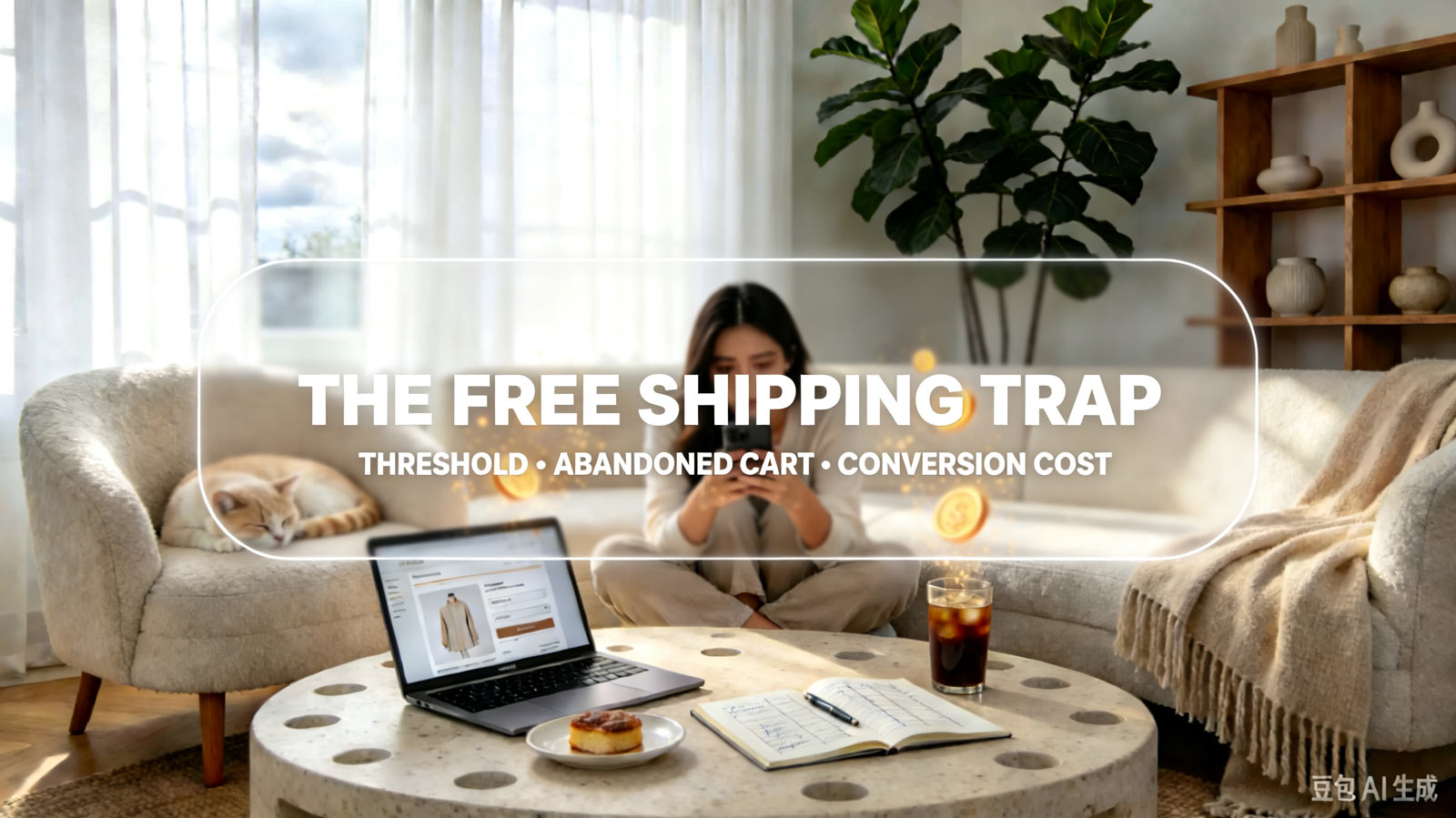
Free shipping thresholds are widely treated as a go-to growth tactic: raise the minimum spend, push up average order value, and safeguard your margins. But for cross-border stores, this common tactic carries a hidden downside. A threshold that works well for local buyers can quietly tank conversions when delivery timelines are long and customer trust is fragile.
This post breaks down why free-shipping psychology works differently for international shoppers, how to measure the real conversion cost of your current minimum order, and how to design threshold rules that grow AOV without bleeding checkout traffic.
Why Thresholds Work Differently Across Borders
Domestic shoppers are usually comfortable with free shipping minimums because delivery is fast, predictable and low-risk. Cross-border buyers evaluate the same threshold against a much longer list of worries: extended transit, customs uncertainty, currency exchange fees, and the hassle of international returns. All this friction shapes their mindset before they even see your free-shipping banner.
The risk perception changes everything. A shopper waiting 10 days for delivery will view a $59 spend minimum far less favorably than someone expecting next-day delivery. The perceived risk raises the mental bar for adding extra items just to unlock free shipping.
Trust is the dividing line. For first-time visitors who haven’t experienced your delivery reliability, a high threshold feels like a demand rather than a reward. Instead of feeling like they’re getting a perk, they feel forced to spend more to offset your shipping cost — and uncertain buyers simply abandon the cart.
The Hidden Cost Stack of an Overly High Threshold
When you set a threshold 30–40% above your median order value, three overlapping revenue leaks emerge, and most store audits miss them:
- Checkout abandonment: Buyers ready to spend $28 leave when they hit a $59 free-shipping requirement. These are not bargain hunters; they are qualified buyers lost at the final stage.
- Forced add-on discounting: To rescue stalled carts, sellers cut prices on add-ons to help customers hit the threshold. This eats away the exact margin the threshold was meant to protect, while training shoppers to wait for discounts.
- Worse first-order economics: Paid-traffic new buyers convert worse under high thresholds, pushing up your blended CAC. You pay full ad cost for traffic that a domestic store would convert easily.
A Practical Framework to Set Your Threshold
Start with your historical order distribution, not just your margin target. Pull 90 days of order data and locate the 60th and 75th percentiles of order value. A balanced threshold sits just above the 60th percentile: high enough to gently lift basket size, but low enough that most interested buyers can close the gap with one relevant add-on, rather than throwaway filler products.
Run a shipping-cost stress test: If your average cross-border parcel costs $6–9 to ship, a threshold gap of $15–20 per order usually protects contribution margin without scaring buyers away. Set a clear guardrail: raising the threshold by 15% should not cost you more than 3–5% of checkout conversions. If conversion drops more, the tactic is hurting you.
Don’t overlook mobile. Over 70% of cross-border shopping happens on mobile, where adding items and comparing prices is more cumbersome. A threshold that feels reasonable on desktop can feel punitive on a small screen.
UX Patterns That Reduce Cart Friction
Small experience tweaks often outperform lowering the threshold number itself.
- In-cart progress bars: Messaging like “You’re $7 away from free shipping” beats static text. It frames the gap as an achievable goal instead of a hard barrier.
- Gap-matched add-on recommendations: If the shopper needs $7 more, suggest a $9 accessory, not a high-priced bestseller.
- Regionalised thresholds: European shoppers may accept higher minimums thanks to shorter shipping lanes; Southeast Asian buyers often respond better to lower thresholds paired with flat-rate shipping tiers.
- First-order exemption: Waive the threshold for a buyer’s first purchase. Win their trust first, then use free shipping rules to boost repeat-order baskets.
How to Measure the True Impact
Core Takeaways
- Cross-border shoppers are far more sensitive to free shipping thresholds than domestic buyers. Use regional rules, not one global setting.
- Anchor your minimum spend near the 60th percentile of your order-value distribution, not purely margin targets.
- Discounting add-ons just to hit thresholds erodes the margin you are trying to preserve.
- Progress bars, targeted small add-ons and first-order exemptions help preserve conversions without lowering your threshold.