
Introduction
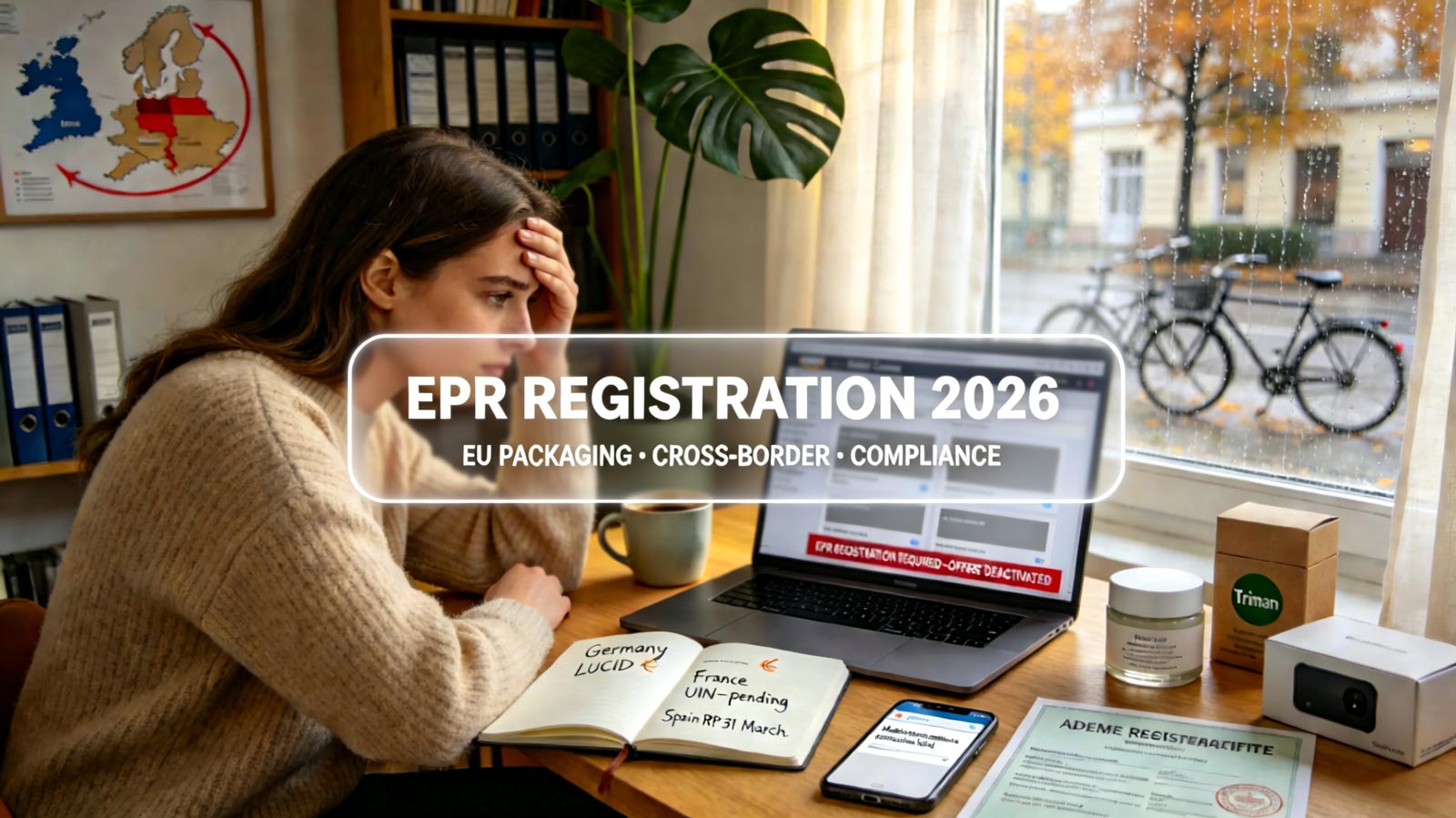
Since 12 August 2026, the EU Packaging and Packaging Waste Regulation (PPWR) has applied in full, turning Extended Producer Responsibility (EPR) from a German-French formality into a union-wide listing condition. Marketplaces and fulfillment providers must now collect packaging registration numbers from every seller, and many merchants discover this only when offers go dark. Drawing on compliance reviews across stores in Globe Fulfillment's EU network in Q3 2026, this report breaks down what changed, what it costs, and the audit sequence that keeps EU listings live through peak season.
The New Baseline: One Regulation, Twenty-Seven Registrations
The PPWR harmonized the definition of "producer" across the EU — and for cross-border sellers shipping directly to consumers, the producer is usually you, regardless of where your company is incorporated. What it did not harmonize is the registration itself. Each member state keeps its own register, its own number format, and its own reporting calendar. A German LUCID registration does not cover France; a French UIN does nothing in Spain.
Three national systems matter most for the average cross-border catalog:
- Germany: LUCID registration plus a contract with a dual-system licensee is mandatory before your first sale, with no volume threshold. From August 2026, sellers without an EU establishment must also appoint a German authorized representative.
- France: ADEME issues a Unique Identification Number (UIN) per EPR stream — a battery-powered device in retail packaging can need three separate identifiers. The Triman logo and French sorting instructions must appear on packaging, and non-established producers now need a French mandate holder under the July 2026 transposition law.
- Spain: Registration in the Producer Register (RPP) is required, with a Spanish authorized representative for foreign sellers, an annual declaration due by 31 March, and a separate plastic-packaging tax of €0.45 per kilogram of non-recycled plastic that runs alongside EPR.
How Enforcement Actually Reaches You
Enforcement rarely starts with a government letter — it starts with your sales channels. Three mechanisms are doing most of the filtering in late 2026:
- Marketplace verification. Amazon, eBay and Zalando now request valid EPR numbers per destination country; platforms that cannot verify a number must suspend the offer — or comply on the seller's behalf and recharge eco-fees plus surcharges, turning a compliance gap into an instant margin haircut.
- Register cross-checking. National registers are public, making automated verification cheap. Mismatched company names or expired scheme memberships trigger correction requests with short deadlines.
- Fulfillment suspension. The PPWR obliges fulfillment providers to verify producer status too — a provider without reliable registration data must suspend service, turning an EPR gap into stranded inventory overnight.
What Compliance Really Costs
- Visible cost — manageable. Registration itself is often free or low-cost; the recurring spend is eco-participation fees, typically charged per kilogram of packaging placed on the market. For a mid-size DTC seller, total annual EPR spend across Germany, France and Spain commonly lands in the low four figures.
- Invisible cost — fragmentation. Per-country authorized representatives, per-stream UINs, local-format declarations, and packaging artwork updates for Triman and sorting instructions. Our network reviews show sellers spend more on coordination overhead than on fees themselves — precisely where errors accumulate.
A Pre-Peak EPR Audit in Four Steps
- Map every destination country. Pull your FBA distribution settings and order history to list every member state where units actually land, then check registration status for each. Pan-EU FBA placement means pan-EU registration.
- Verify number-to-entity consistency. Confirm each registration matches your exact legal company name and that scheme memberships are current, not just the initial registration.
- Close representation gaps. Appoint authorized representatives where required (Germany, France and Spain all demand one for non-established sellers) and confirm they are recorded in the relevant registers.
- Fix packaging artwork once, centrally. Produce a single master artwork file carrying Triman, sorting instructions and recyclable-material marks, so future print runs never reopen the issue.
Core Takeaways
- PPWR applies since 12 August 2026, but registration remains national — one number per country, per stream, with no union-wide shortcut.
- Enforcement flows through marketplaces and fulfillment providers first: unverified sellers face deactivation, pay-on-behalf surcharges, or service suspension before any regulator contacts them.
- Budget for coordination, not just fees: authorized representatives, per-country declarations and packaging artwork updates consume more effort than the eco-contributions themselves.
- Run the four-step audit before Q4 volume peaks; registration backlogs of four weeks or longer make last-minute fixes unreliable during the holiday window.