
Introduction
Why Trend Hits Die While Replenishment SKUs Compound
A viral product sells curiosity. A consumable product sells a habit. The difference shows up directly in unit economics.
Trend products front-load revenue and back-load risk. Demand peaks fast, ad costs spike as competition floods in, and by the time your inventory clears customs, the algorithm has moved on. Your customer acquisition cost (CAC) is paid once, the margin is collected once, and the relationship ends.
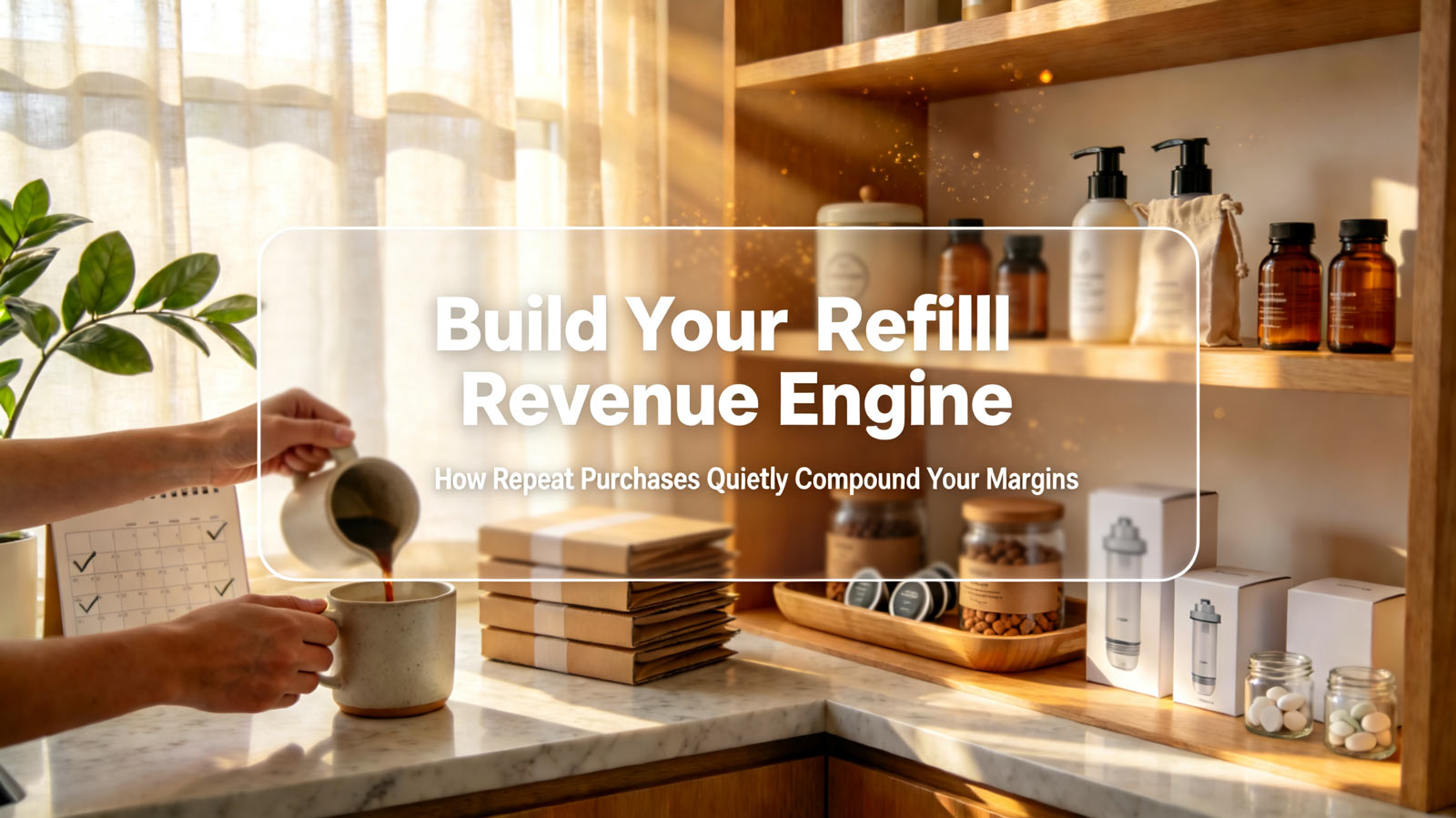
Replenishment products invert this math. A customer who buys a 30-day supply of supplements, pet treats, cleaning refills, or skincare consumables returns on a predictable cycle. One CAC payment generates three, five, or ten transactions. At a modest 25–35% repurchase rate within 60 days, a single customer can be worth 2.5–3× the lifetime revenue of a one-time trend buyer—without spending an extra dollar on ads.
There is also a defensive advantage: consumable brands accumulate subscription-style behavior that copycat competitors cannot clone with a cheaper listing. Switching costs rise with every successful refill cycle.
The 2026 Consumable Screening Framework: Four Non-Negotiables
Not every "consumable" qualifies. Apply these four gates before committing inventory budget:
- Genuine depletion cycle of 20–60 days. Shorter than 20 days and shipping friction erodes satisfaction; longer than 60 days and the repurchase habit never forms. The sweet spot creates 6–12 natural repurchase moments per customer per year.
- Shipping-safe formulation. Liquids over 100ml, extreme temperature sensitivity, and fragile glass packaging all inflate damage and compliance costs. Powder, solid, gel-in-sachet, and shelf-stable formats survive cross-border logistics far better.
- Habit lock-in, not just repeat need. The strongest consumables anchor to a routine: morning skincare, weekly pet grooming, monthly home descaling. Products tied to routines resist price comparison; products tied only to "running out" face constant re-evaluation.
- Gross margin above 45% after landed cost. Consumables carry higher compliance and quality-control overhead. Anything below 45% margin leaves no room for the sampling, first-order discounts, and retention incentives that consumable models require upfront.
Five Consumable Categories Passing 2026 Standards
- Pet health supplements and functional treats. Pet owners repurchase on fixed schedules, churn is low, and emotional spending resists price sensitivity. Stick to shelf-stable formats and clear ingredient labeling for US/EU compliance.
- Home appliance consumables. Water filter cartridges, descaling tablets, vacuum dust bags, and air purifier filters. These ride on appliance installed base growth—demand is structural, not viral—and competitors struggle to undercut proprietary fit formats.
- Skincare refills. The refill-pouch model cuts packaging cost by 30–50% while anchoring customers to your brand's dispenser. EU green-packaging regulation momentum makes this category a compliance-tailwind play, not just a margin play.
- Specialty coffee and functional tea pods. Consumption is daily, margins are strong, and small-batch origin stories justify premium pricing. The key risk is freshness logistics—partner with fulfillment centers offering bonded warehousing to compress delivery windows.
- Cleaning concentrate tablets. Ultra-lightweight, non-liquid (lower shipping restrictions), and riding the anti-plastic consumer shift. One bottle sold once, refills sold forever.
Operating Model: From First Order to Refill Revenue
The consumable playbook differs from trend selling in three operational areas.
Subsidize the first order deliberately. A breakeven or slightly negative first-order economics is acceptable if your 90-day repurchase data validates. Budget 15–20% of expected LTV toward first-purchase incentives—welcome bundles, sampler sizes, or bundle-with-dispenser pricing.
Build the reminder layer. Email/SMS flows timed to depletion cycle minus shipping window ("time to reorder before you run out") consistently outperform discount blasts. Merchants running depletion-timed flows report 20–35% of second orders coming through owned channels at zero ad cost.
Protect quality consistency above all. One bad batch—a rancid treat, a broken seal, a weak formula—doesn't just trigger a refund; it breaks the habit loop permanently. This is where fulfillment partner QC standards, batch tracking, and FIFO (first-in-first-out) warehouse rotation become profit-critical, not just operational details.
Core Takeaways
- Consumable SKUs convert one-time CAC into 6–12 annual repurchase events, making lifetime value—not first-order margin—the metric that decides selection.
- Screen for a 20–60 day depletion cycle, shipping-safe format, routine lock-in, and 45%+ landed margin before committing inventory budget.
- Strongest 2026 categories: pet supplements, appliance consumables, skincare refills, specialty coffee/tea, and cleaning tablets—all structural-demand, low-virality plays.
- Success depends on the refill layer—depletion-timed reminders, first-order subsidies funded by LTV, and fulfillment-level QC that protects the habit loop every single cycle.